
You might be juggling feedings, appointments, and the constant hum of parenting questions. Those everyday moments can strain your mental space, whether you are trying to conceive, navigating pregnancy, managing newborn care, or learning the rhythms of postpartum recovery. Good Mental Health Habits for a Better Life help you hold steady when days feel scattered and emotions run high.
These practices are small, practical, and meant to fit into real life with a baby or during pregnancy. Each habit below focuses on emotional comfort, better sleep, clearer thinking, and stronger bonds with your child. You can pick one habit or try a few over time. Use them as gentle anchors to protect your wellbeing and your relationship with your family.
Here are 19 Good Mental Health Habits for a Better Life that are simple, doable, and shaped around parenting tips, pregnancy needs, and postpartum recovery.
1. Morning Breathing Ritual

Start each morning with five slow, intentional breaths before the day begins. You can do this seated on the edge of the bed, in the nursery, or during early feeding moments. This short ritual helps clear foggy thinking and brings focus when you feel overwhelmed. It’s especially useful in pregnancy and postpartum recovery to steady emotions and reduce stress quickly.
Why This Works
- Lowers immediate tension
- Anchors you during unpredictable days
- Helps regulate mood during pregnancy
- Prepares you for caregiving tasks
Quick Tips
- Count to four on inhale, four on exhale
- Repeat five times before getting up
- Practice while baby naps
- Use a soft alarm reminder
- Try with a partner for shared calm
2. Micro Self-Care Breaks

Take 5 to 10 minutes for a simple self-care habit several times a day. This could be stretching, sipping tea, or journaling one line. When you are in fertility treatments, pregnancy, or newborn care, these micro breaks prevent burnout and give your nervous system a reset without needing long stretches of time.
Why This Works
- Fits into busy schedules
- Reduces stress build-up
- Restores energy in short bursts
- Encourages consistency in self-care
Quick Tips
- Set phone timers for reminders
- Keep a small self-care kit nearby
- Pick three go-to mini activities
- Do one micro break after a feeding
- Combine with breathing for extra calm
3. One-Thing To-Do List

Instead of long lists, write one clear task each morning. Focus on what will make the day feel manageable, like a walk, a phone call, or a shower. This method eases decision fatigue during postpartum recovery and while raising a newborn by helping you feel productive without pressure.
Why This Works
- Reduces overwhelm
- Helps you complete meaningful tasks
- Builds small wins daily
- Supports mental clarity during parenting
Quick Tips
- Keep the list visible
- Celebrate finishing the one item
- Swap tasks daily for variety
- Combine with micro breaks
- Involve your partner for support
4. Gentle Movement Routine

Short, gentle movement like a 10-minute walk or stretching session can lift mood and ease postpartum aches. Movement supports sleep, reduces anxiety, and is gentle enough for pregnancy and early postpartum recovery. You don’t need intense workouts; consistency matters more than intensity.
Why This Works
- Releases calming endorphins
- Improves sleep quality
- Reduces physical discomfort
- Supports emotional regulation
Quick Tips
- Walk with a stroller or baby carrier
- Stretch while nursing if comfortable
- Aim for short daily sessions
- Use guided postpartum-friendly videos
- Wear supportive shoes and layers
5. Gratitude Moments

Write or say three small things you are grateful for each day. This habit shifts focus away from worry, helps with postpartum mood swings, and offers calm during fertility treatments. Gratitude doesn’t ignore hard days; it helps you notice softness amid challenges.
Why This Works
- Builds positive emotional focus
- Lowers stress reactivity
- Encourages noticing small joys
- Supports consistent emotional balance
Quick Tips
- Keep a bedside gratitude journal
- Share one gratitude at dinner
- Use a gratitude app reminder
- Make it a bedtime ritual
- Keep entries short and specific
6. Limit Social Media Comparison

Set boundaries with social media by scheduling no-phone windows or muting accounts that trigger comparison. Parenting content can feel helpful but also heighten pressure during pregnancy and postpartum recovery. Reducing screen time protects your mood and helps you stay present with your child.
Why This Works
- Reduces feelings of inadequacy
- Clears mental space for real connections
- Lowers stress from constant comparison
- Helps you focus on your family’s actual needs
Quick Tips
- Use app timers or focus mode
- Curate your feed to positive accounts
- Avoid scrolling during feeds or naps
- Replace with reading or music
- Try a weekend social media break
7. Share the Load

Ask for help and accept offers when they come. Delegating chores, meal prep, or baby care supports postpartum recovery and eases parenting stress. Sharing tasks also builds connection and prevents isolation when you are feeling fragile during early postpartum weeks or fertility treatments.
Why This Works
- Reduces daily overwhelm
- Boosts practical recovery after birth
- Strengthens partnerships
- Frees time for rest and bonding
Quick Tips
- Make a short list of helpful tasks
- Say yes to one specific offer
- Rotate responsibilities with your partner
- Use a shared checklist app
- Schedule a regular helper if possible
8. Bedtime Wind-Down Routine

Create a predictable wind-down routine for yourself and baby. Dim lights, a warm shower, or light reading send signals to your nervous system that sleep is coming. Consistent routines support postpartum recovery and improve mental clarity when you have fragmented sleep.
Why This Works
- Signals the body to relax before sleep
- Helps regulate hormones after birth
- Creates predictable cues for baby and parent
- Improves sleep quality over time
Quick Tips
- Stick to the same 20–30 minute pattern
- Limit screens before bed
- Use soft lighting and calming scents
- Include a short breathing ritual
- Be flexible during growth spurts
9. Set Gentle Boundaries
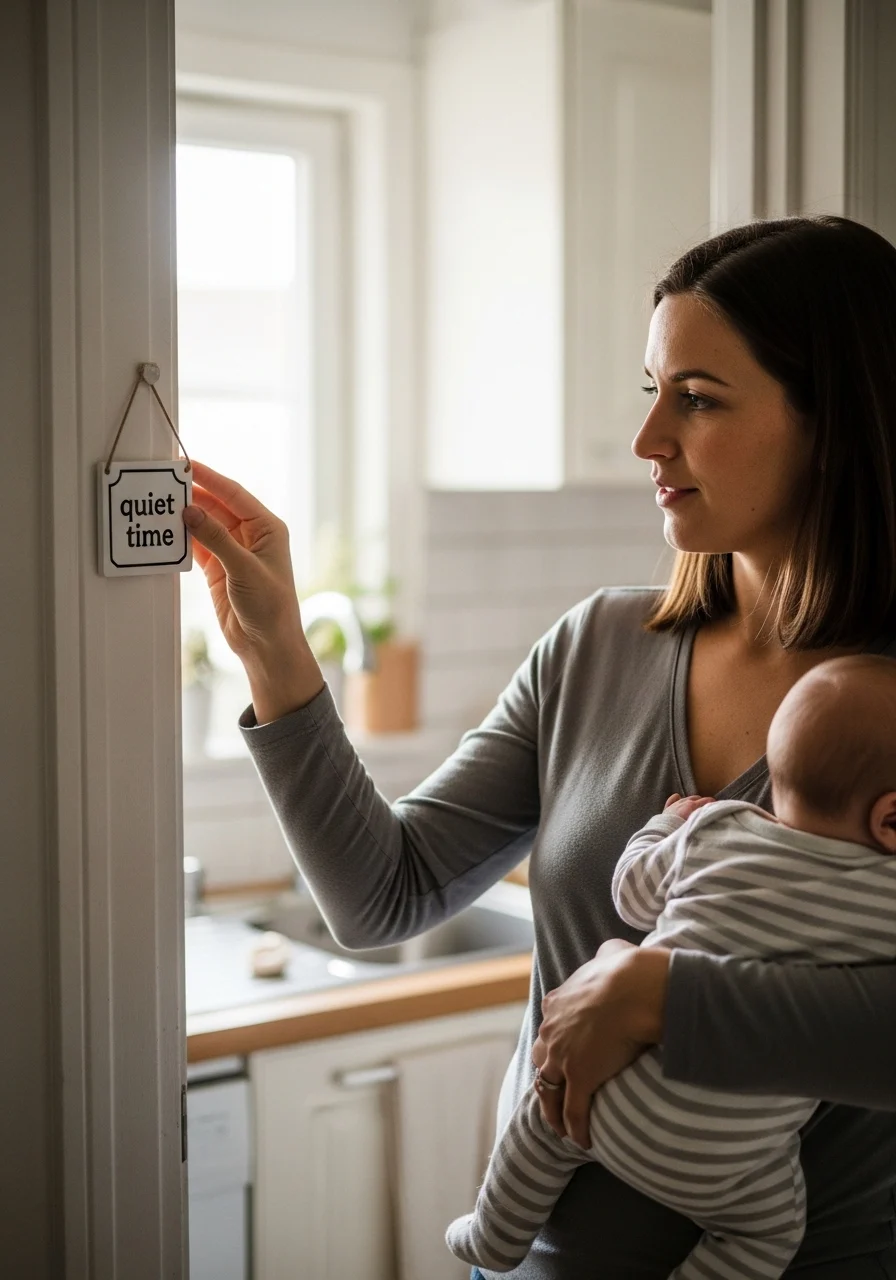
Learn to say no to extra commitments that drain you. Protecting your energy is essential across fertility treatments, pregnancy, and postpartum recovery. Boundaries preserve calm so you can show up for your child and yourself without feeling depleted.
Why This Works
- Protects emotional resources
- Reduces stress from over-commitment
- Creates space for recovery and bonding
- Teaches healthy limits to your circle
Quick Tips
- Practice a short decline phrase
- Offer alternatives when possible
- Plan buffer time between activities
- Communicate needs ahead of time
- Reassess boundaries regularly
10. Connect with Other Parents

Find a local group or online community that feels supportive. Sharing honest experiences helps you feel less alone in parenting, pregnancy concerns, or postpartum recovery. Connection gives practical tips and emotional reassurance that you’re not carrying everything on your own.
Why This Works
- Normalizes your feelings
- Provides practical parenting tips
- Builds emotional support networks
- Reduces isolation during early parenthood
Quick Tips
- Try a stroller group or baby class
- Join a moderated online forum
- Bring a small snack to meetups
- Keep interactions low-pressure
- Rotate meetups to match your energy
11. Short Joy Moments with Baby

Intentionally carve out five-minute play or cuddle moments. These micro connections boost oxytocin and mood, strengthening your bond while offering quick emotional refreshment. Even brief joy moments can help you through hard stretches in parenting and postpartum recovery.
Why This Works
- Deepens parent-child bonding
- Provides immediate mood lift
- Fits into busy or sleep-deprived days
- Reinforces positive parenting routines
Quick Tips
- Use simple games like peek-a-boo
- Sing a short song during feeds
- Make eye contact and smile
- Schedule one joy moment daily
- Keep it pressure-free and playful
12. Daily Nature Time

Spend even ten minutes outside each day. Natural light and fresh air support mood and sleep cycles, which helps during pregnancy and postpartum recovery. Nature time gives a break from walls and screens so you can reconnect with yourself and your baby.
Why This Works
- Boosts vitamin D and circadian rhythm
- Lowers stress and improves mood
- Breaks monotony of indoor caregiving
- Encourages light movement and fresh perspective
Quick Tips
- Walk around the block after a feed
- Sit in the yard for a few minutes
- Bring a blanket and breathe deeply
- Combine with errands for efficiency
- Time walks to baby’s natural awake window
13. Thought-Tracking Journal

Spend five minutes jotting down repeating thoughts or worries. Writing them helps you see patterns and respond more gently to anxious moments common in fertility struggles, pregnancy changes, and early parenting. This habit helps you notice unhelpful thoughts so they lose power over time.
Why This Works
- Externalizes worry for clearer thinking
- Helps identify triggers and progress
- Supports conversation with a therapist or partner
- Encourages mindful reflection
Quick Tips
- Keep the journal by your bed
- Use prompts like What’s on my mind?
- Revisit entries weekly for patterns
- Use short bullet points
- Share key insights with your partner
14. Regular Postpartum Check-Ins

Schedule mental health check-ins after birth, even if you think you’re coping. Postpartum recovery includes emotional shifts that deserve attention. Regular check-ins help detect mood changes early and make it easier to get support if you need it.
Why This Works
- Normalizes monitoring emotional health
- Catches depression or anxiety early
- Connects you with resources for parenting tips
- Supports long-term recovery
Quick Tips
- Pair check-ins with pediatric visits
- Ask your provider specific mood questions
- Keep a short mood tracker
- Bring a partner or friend for support
- Seek referrals when needed
15. Plan Small Pleasures

Plan one small pleasure each week like a favorite snack, a short podcast, or a bath. When life centers on baby care, these tiny planned treats help maintain identity and make parenting feel more balanced. They also provide predictable emotional boosts during postpartum recovery.
Why This Works
- Preserves a sense of self
- Creates tiny anchors of joy
- Gives something to look forward to
- Reinforces self-care consistency
Quick Tips
- Make a simple weekly list
- Keep items low effort and meaningful
- Schedule them into your calendar
- Trade treats with a partner
- Adjust as baby’s routine changes
16. Mindful Feeding Moments

During feeds, practice being present for a minute by focusing on touch, breath, and your baby’s cues. Mindful feeding helps reduce worry, deepens bonding, and supports emotional regulation for both you and the baby. It can be especially soothing in postpartum recovery and newborn care.
Why This Works
- Strengthens parent-child connection
- Reduces mind racing during routines
- Supports responsive caregiving
- Helps you notice baby’s signals
Quick Tips
- Breathe slowly between feeds
- Put your phone away when possible
- Notice baby’s tiny movements
- Add a quiet phrase or song
- Try one mindful feed per day
17. Celebrate Tiny Wins

Acknowledge small wins like a successful nap, a completed shower, or a calm feeding. Celebrating tiny wins shifts your focus from what’s unmet to what you accomplished. This habit builds resilience through the ups and downs of parenting, pregnancy changes, and postpartum recovery.
Why This Works
- Reinforces positive momentum
- Counters perfectionism
- Boosts confidence as a caregiver
- Encourages realistic expectations
Quick Tips
- Keep a visible wins jar or list
- Share wins with a friend or partner
- Celebrate with a small treat
- Include baby milestones too
- Review weekly for encouragement
18. Gentle Sleep Priority

Protect sleep when you can by napping when the baby naps and asking for support overnight if possible. Sleep supports mood, concentration, and postpartum recovery. Prioritizing rest doesn’t mean everything else stops; it means smarter choices for long-term wellbeing.
Why This Works
- Restores emotional and physical energy
- Helps regulate hormones after birth
- Improves decision-making and patience
- Aids recovery from fertility treatments or birth
Quick Tips
- Sleep in shifts with your partner
- Limit caffeine after midday
- Keep the bedroom cool and dark
- Use white noise for consistent naps
- Say yes to help during night stretches
19. Seek Professional Support

Reach out to a therapist, counselor, or lactation consultant when worries won’t ease. Professional support is practical and focused on helping you navigate fertility stress, pregnancy anxiety, postpartum recovery, or parenting challenges. Asking for help is a sign of care for you and your family.
Why This Works
- Provides targeted, expert guidance
- Offers coping strategies and validation
- Helps address mood disorders early
- Supports both short-term and long-term wellbeing
Quick Tips
- Ask your provider for referrals
- Try telehealth if travel is hard
- Bring notes to appointments
- Set small goals with your therapist
- Reassess progress regularly
Good Mental Health Habits for a Better Life don’t require perfect conditions. These 19 habits are meant to fit into real mothering, pregnancy, fertility, and postpartum rhythms. Pin this list to return to one idea at a time and try adding one new habit each week. Small, steady practices add up and help you feel more present, calm, and connected to your child. Which habit feels easiest to start with today?