You’ve got a full house and pockets of time that feel too short. Between snacks, naps, and laundry, finding simple, joyful activities can help you steal small wins and keep your children curious at home. These activities for kids at home are made to fit real days, not idealized schedules.
You’ll find quiet, active, creative, and low-prep ideas that work for babies, toddlers, and early elementary kids. Each idea links back to practical parenting tips and easy setups you can reuse. Use them when you need a calm reset, a short distraction, or a way to connect without stress. Pin a few favorites and try them this week.
1. Sensory Bin Play

A sensory bin is a low-effort way to give your child hands-on exploration. Fill a shallow container with rice, pasta, water beads, or shredded paper. Add measuring cups, spoons, and small toys for scooping and sorting. This keeps little hands busy and helps build fine motor skills. You stay nearby for calm supervision while your child experiments and talks through discoveries. It’s a peaceful, focused activity that can stretch across nap transitions or while you fold laundry.
Why This Works
- Encourages tactile exploration and fine motor development
- Keeps attention engaged with minimal setup
- Offers a calm, independent play option for short stretches
- Supports early language as kids describe textures
- Easy to adapt for different ages
Quick Tips
- Use a shallow plastic bin for easy reach
- Lay down a towel for quick cleanup
- Rotate fillers to keep interest fresh
- Add themed objects for seasonal learning
- Supervise closely with small pieces
- Store in a narrow spot for quick access
2. Indoor Obstacle Course

Turn your living room into a safe obstacle course. Use cushions to climb, a blanket over chairs for a tunnel, and tape a hop line on the floor. Give simple challenges like crawl, jump, or balance. This uses up energy without needing outdoor space. You can set a short timer and make it a game to do together. It’s great for gross motor skills and for moments when everyone needs to move before quiet time.
Why This Works
- Burns excess energy in short bursts
- Builds coordination and body awareness
- Lets you control intensity for younger kids
- Encourages imaginative play and role-taking
- Easy to reset for multiple rounds
Quick Tips
- Use non-slip surfaces for safety
- Keep obstacles low and soft for toddlers
- Offer simple verbal cues or a countdown
- Join in to model movement ideas
- Swap items for variety each day
- End with a calming stretch
3. DIY Story Stones

Make storytelling stones with smooth pebbles and washable markers or paint. Draw characters, objects, and emotions. Place them in a bag and let your child pull stones to build a story. This supports language, sequencing, and imagination. You can guide the tale when needed or let your child lead. It’s a low-mess craft that becomes a take-away toy for quiet moments or car rides. The stones also make a sweet memory project if you keep the set.
Why This Works
- Boosts expressive language and narrative skills
- Encourages creativity without complex rules
- Portable calming tool for transitions
- Can reflect family themes or recent events
- Teaches turn-taking when played with others
Quick Tips
- Use indoor-safe paint or markers
- Start with 6 to 8 simple images
- Store in a cloth bag for easy play
- Prompt with questions to extend stories
- Let older kids help design new stones
4. Kitchen Pretend Play

Set up a little kitchen corner with play food, pots, and utensils. You can include real safe items like measuring cups or wooden spoons. Pretend cooking helps with vocabulary, sequencing, and social play. It also gives you a simple way to involve kids while you prepare real meals. Alternate roles so they practice serving and cleaning. This is one of the easiest activities for kids at home when you want cooperative play with minimal prep.
Why This Works
- Builds practical life vocabulary and routines
- Encourages role play and social interaction
- Offers a calm activity that mirrors daily life
- Helps with fine motor skills using utensils
- Easily integrated into mealtime learning
Quick Tips
- Include a small tray for serving practice
- Rotate props for seasonal themes
- Use a play apron to make it feel special
- Add counting games with spoonfuls
- Keep a safe shelf for child-accessible items
5. Cozy Reading Nook

Create a small, inviting reading nook with cushions, a blanket, and a low basket of favorite books. Make it a cozy habit to read together for five to fifteen minutes. Short daily sessions build listening skills and a love of books. This gives you both a predictable calm moment in the day. Rotate titles and include interactive picture books for toddlers. The nook can double as a quiet retreat when either of you needs a soft reset.
Why This Works
- Strengthens early literacy and attention
- Creates a predictable calming routine
- Deepens bonding through shared stories
- Easy to adapt for age and interest
- Encourages independent book play
Quick Tips
- Keep books at child height for independence
- Add a soft light for evening routines
- Use a mix of rhymes and simple stories
- Let kids choose two books each visit
- Keep one special “surprise” book for novelty
6. Simple Baking Together

Baking simple recipes like muffins or cookies is a great hands-on activity. Kids can pour, stir, and sprinkle with your help. This teaches measuring, following steps, and patience while the oven works. The sensory smells and final treat make it memorable. You control the level of involvement based on age. Baking together can also help with picky eaters when kids choose ingredients and try new flavors with small bites.
Why This Works
- Teaches basic math and sequencing
- Engages multiple senses for memory building
- Offers a tangible reward and sense of pride
- Supports cooperation and following directions
- Provides a cozy, productive distraction
Quick Tips
- Choose no-bake or quick-bake recipes for short attention spans
- Pre-measure dry ingredients for toddlers
- Use safe utensils and supervise near stove or oven
- Talk through each step to reinforce learning
- Let kids decorate their portion
7. Indoor Nature Tray
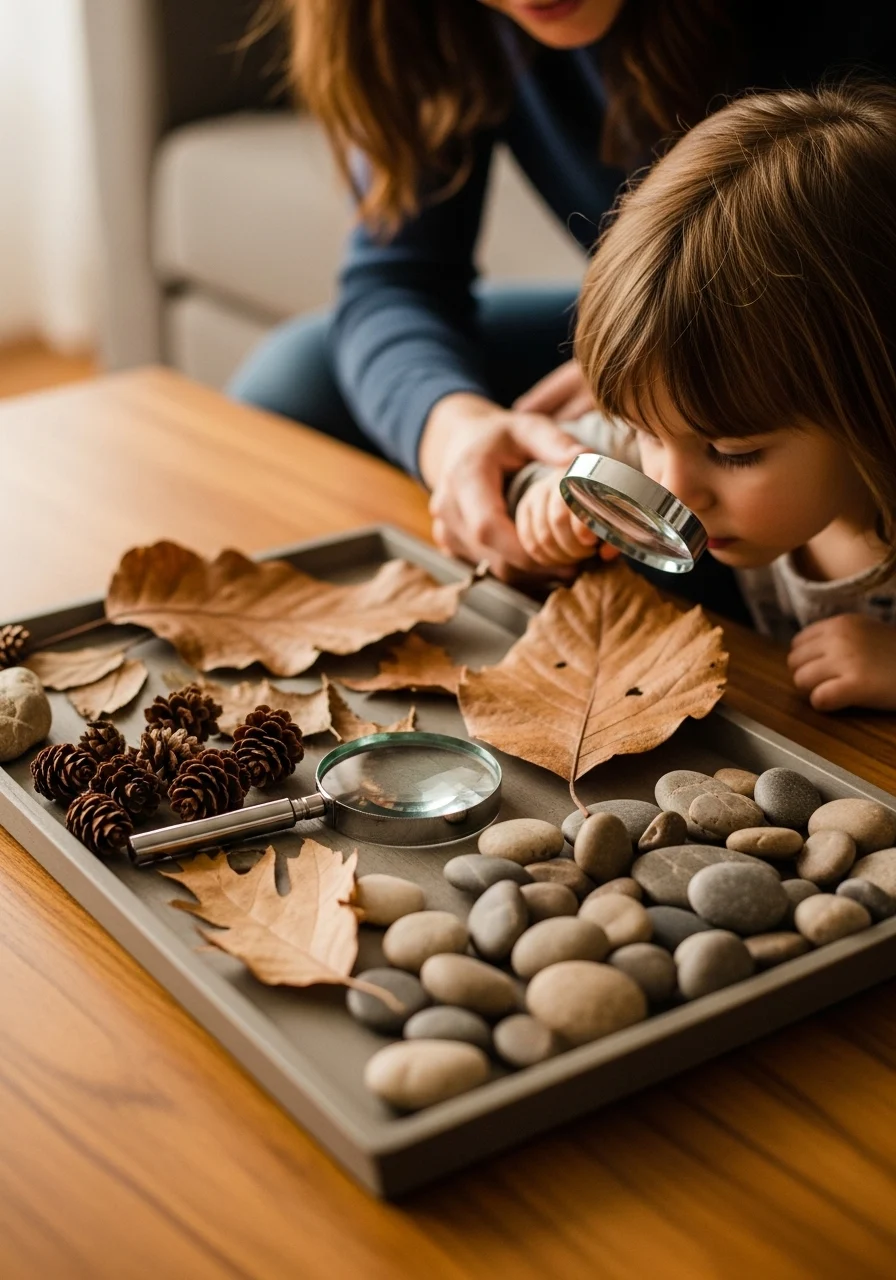
Collect nature items from a walk and arrange them on a tray for exploration. Add a magnifying glass, small bowls, and labels. This encourages observation and vocabulary without leaving home. It’s great for curious toddlers and preschoolers who enjoy sorting textures and shapes. You can connect items to books or short facts. The tray gives a focused, screen-free activity that fits short windows of time and invites calm conversation.
Why This Works
- Builds observation and descriptive language
- Connects outdoor time to indoor learning
- Offers a portable, repeatable activity
- Encourages gentle curiosity and care for nature
- Simple to tailor by age and interest
Quick Tips
- Use child-safe items only
- Add a sketchbook for drawing observations
- Rotate collections by season
- Encourage gentle handling and cleanup
- Pair with a short nature story
8. Sock Puppet Theater

Turn old socks into quick puppets with buttons, yarn, and felt. Put on a two-minute puppet show with simple characters and short scenes. Puppets help kids practice speech, emotion, and storytelling. You can keep shows short to match attention spans. This activity is easy to pause and return to across the day. It’s also a sweet way to let children act out feelings or replay a familiar family story.
Why This Works
- Encourages language and emotional expression
- Boosts imaginative and dramatic play
- Easy to set up and store for quick sessions
- Helps children practice social roles and empathy
- Offers a playful way to rehearse routines
Quick Tips
- Keep supplies in a small box for quick access
- Use tape instead of glue for younger kids
- Suggest a theme or simple prompt to start
- Record a short performance for a proud moment
- Reuse characters for ongoing stories
9. Sticker Sorting Station
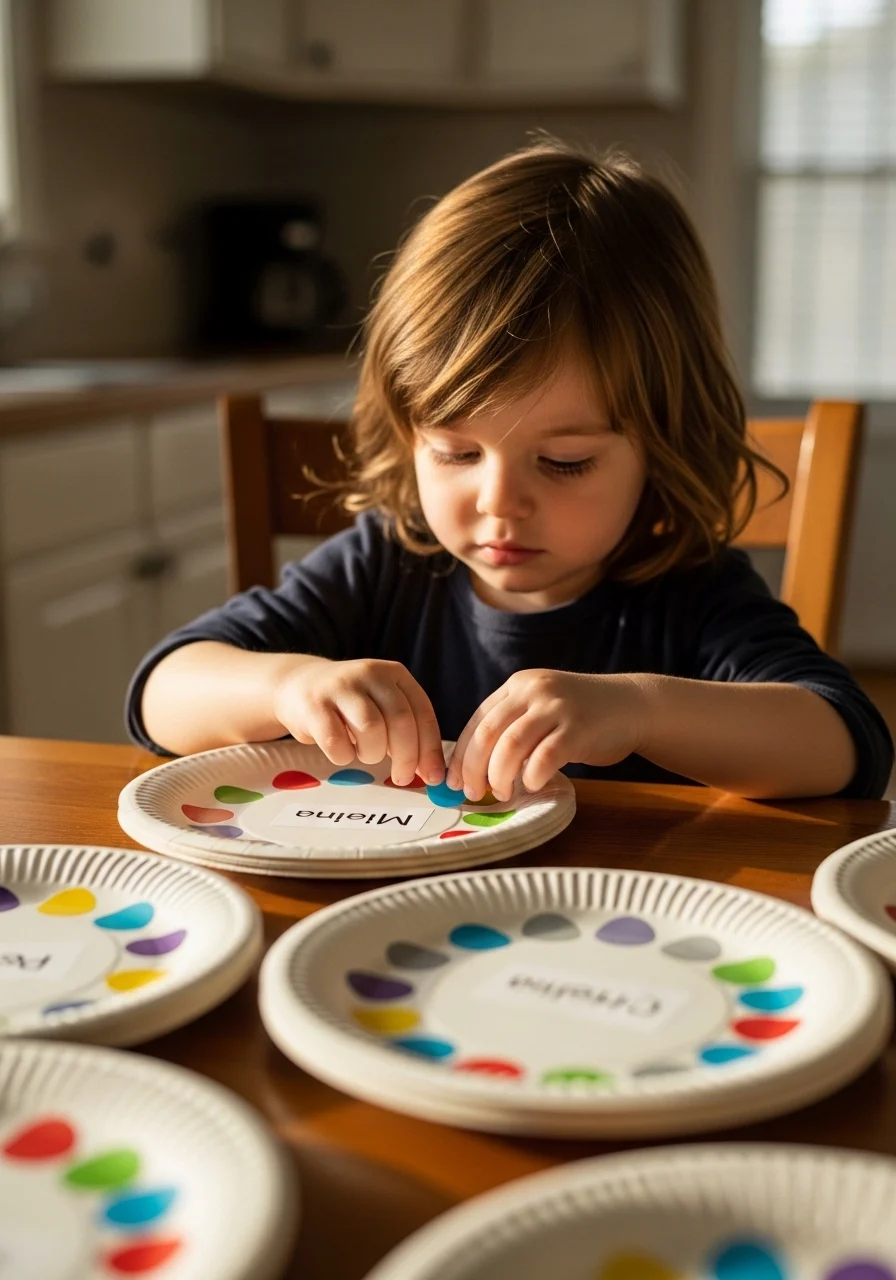
Give a sheet of stickers and paper plates for sorting by color, size, or theme. This low-mess activity supports fine motor skills and early math thinking. Younger kids press stickers; older kids can create patterns or simple graphs. It’s a calm, short activity that fits snack or transition times. The result can become a little art display or a learning chart pinned to the fridge for family pride.
Why This Works
- Strengthens fine motor control and pincer grasp
- Introduces sorting and classification concepts
- Quick to start with minimal cleanup
- Builds focus through repetitive, calming action
- Offers a sense of achievement when completed
Quick Tips
- Pre-cut paper plates for speed
- Provide a variety of sticker types for interest
- Turn sorting into a mini counting game
- Offer a small reward sticker for effort
- Use themed stickers for seasonal learning
10. Build-a-Fort Hour

Make a cozy fort using blankets, cushions, and clothespins. Spend a relaxed hour inside reading, snacking, or telling stories. Forts create a private, calming space that feels special. They also encourage cooperative building and problem-solving. You can make a quick fort when you need a short stretch of contained play. This simple construction becomes a new environment for imaginative games or quiet time.
Why This Works
- Creates a cozy, contained environment for calm play
- Encourages teamwork and spatial thinking
- Makes ordinary moments feel special and new
- Offers a gentle retreat for quiet bonding
- Easy to set up and collapse for flexibility
Quick Tips
- Use lightweight blankets and secure with heavy books
- Add a soft light source for reading inside
- Keep snacks in spill-proof containers
- Make it age-appropriate in height and stability
- Encourage clean-up together afterward
11. Dance Party Break

Put on a short playlist and dance together for five to ten minutes. This quick activity lifts mood and gives kids movement without planning. Use simple prompts like freeze, slow motion, or copy the leader. It’s great for sudden energy bursts and for practicing listening. You’ll both get a break from screens and responsibilities, and the silliness helps lighten the day in a real, accessible way.
Why This Works
- Releases energy with immediate mood benefits
- Supports rhythm and coordination
- Easy to do in small spaces and short windows
- Encourages emotional expression through movement
- No special equipment required
Quick Tips
- Keep a dance playlist ready on your device
- Use themed dances like animal moves for toddlers
- Set a timer to keep it brief if needed
- Invite siblings to create a short routine
- Combine with a calming cool-down stretch
12. Simple Science Experiments

Try quick experiments like volcano fizz, color mixing, or sink-and-float tests. Use common kitchen items and explain outcomes simply. These experiments spark curiosity and teach cause-and-effect. You can keep each activity short, focusing on observation and simple predictions. It’s a fun way to bring early science into everyday life without a lot of prep. Promise short clean-up and your child will be more invested in helping.
Why This Works
- Introduces scientific thinking and observation
- Uses everyday items for accessible discovery
- Encourages curiosity and experimental language
- Short activities fit into busy routines
- Makes learning tactile and memorable
Quick Tips
- Prepare materials in small bowls for easy access
- Ask “what do you think will happen” before starting
- Use trays to contain messes
- Follow safety steps and supervise closely
- Keep a camera ready to capture reactions
13. Art with Nature Paints

Make paints from mashed berries or simply use leaves and flowers as stamps. Let your child press, rub, and print on paper. This activity connects outdoor exploration with creative expression. It’s low-cost and sensory rich. You can talk about colors, shapes, and seasons as you create. Keep it short for younger kids and offer an apron or old shirt for easy cleanup. The finished pieces make sweet, home-made displays.
Why This Works
- Links nature study with creative play
- Encourages exploration of texture and color
- Offers sensory and fine motor practice
- Produces tangible art to display proudly
- Simple materials make it low pressure
Quick Tips
- Test natural pigments on scrap paper first
- Use a washable surface for mess control
- Offer different-sized stamps for variety
- Let art dry on a safe tray or rack
- Frame a favorite piece for the fridge
14. Treasure Map Scavenger Hunt

Draw a simple map of your living space with X marks for small surprises. Hide little toys or notes and follow clues together. This adds an adventurous layer to indoor time and teaches spatial clues and following directions. You can adjust difficulty by using pictures for young kids or riddles for older ones. It encourages cooperation and quiet, focused searching, which is a nice change from high-energy play.
Why This Works
- Builds problem-solving and observation skills
- Encourages teamwork and following simple directions
- Adds structure to indoor exploration
- Can be tailored by age and attention span
- Makes ordinary rooms feel new and exciting
Quick Tips
- Keep clues short and visual for toddlers
- Use a small prize at the end for motivation
- Involve kids in map-making for extra buy-in
- Limit the hunt to one or two rooms for manageability
- Reuse maps for a different prize later
15. Matching and Sorting Games

Use everyday objects for matching and sorting: socks, utensils, buttons, or blocks. Turn it into a timed challenge or a calm sorting task. These games build categorization skills and fine motor coordination. They’re excellent for short moments like waiting for pasta to boil or after playtime. Sorting also helps with language as you name colors, sizes, and shapes together. It’s practical and quietly satisfying for kids who enjoy order.
Why This Works
- Reinforces sorting, counting, and classification
- Improves fine motor control and focus
- Uses household items with no special supplies
- Offers a calming, productive activity
- Supports early math and vocabulary
Quick Tips
- Use baskets or muffin tins to create categories
- Make it playful with a timer or music cue
- Change criteria to keep it engaging
- Praise process, not just speed or accuracy
- Turn sorting into a clean-up habit
16. Calm Corner with Sensory Bottles

Create sensory bottles with water, oil, glitter, and small objects sealed tightly. Keep them on a low shelf in a calm corner with a cushion. When emotions rise, invite your child to watch the slow swirl and breathe. Sensory bottles help self-regulation and offer a tactile focus that’s safe and low-maintenance. They are perfect for brief independent calming and are a soothing tool you can reach quickly during afternoon meltdowns.
Why This Works
- Aids in self-soothing and emotional regulation
- Offers a predictable, calming visual focus
- Simple to make and long-lasting for repeat use
- Portable and safe when sealed well
- Complements other quiet-time routines
Quick Tips
- Use hot glue to seal lids securely
- Experiment with different densities for varied effects
- Keep a set at child height for independence
- Supervise use and periodically check seals
- Use as a brief transition tool before nap or bed
17. Simple Matching Card Games

Create matching card pairs with pictures of animals, foods, or family members. Play classic memory or go fish for simple matching practice. This boosts working memory, attention, and turn-taking. You can make cards from index paper and laminate or slip into plastic sleeves for durability. Short rounds are great during snack time or when you need a calm sitting activity. It’s portable and can be made to match your child’s interests.
Why This Works
- Strengthens memory and attention skills
- Encourages social play with turns and rules
- Easy to personalize and reprint at home
- Works for short attention spans with quick rounds
- Supports vocabulary when themed
Quick Tips
- Start with fewer pairs for beginners
- Use colorful, familiar images to hold interest
- Praise effort and memory strategies
- Store in a small box for travel or quick access
- Let kids help make new card sets
18. Water Play Tray

Fill a shallow tray with water and add cups, sponges, and small boats. This sensory play is calming and ideal for warm days or messy-free indoor fun if you use towels. Water play supports pouring practice and fine motor skills. You can tether it to a theme like ocean animals or bath toys. Keep sessions short and always supervise closely. It’s a simple way to entertain while practicing practical play skills.
Why This Works
- Provides calming sensory stimulation
- Teaches pouring, measuring, and coordination
- Engages focus through repetitive motion
- Simple props create varied play scenarios
- Fun, quick setup for active curiosity
Quick Tips
- Put a bathmat under the tray for quick cleanup
- Use warm water for comfort with little ones
- Add a teaspoon for measuring practice
- Change toys to renew interest
- Empty and dry tray between uses
19. Cardboard Box Creations

Turn a spare box into a car, rocket, or house with simple cuts and washable markers. Cardboard play encourages big imagination and basic tool use like sticking and tearing. It’s a free, open-ended resource you can decorate together. The project can be quick or extended over days as a collaborative build. It supports problem-solving and creative storytelling while giving you a reusable prop for many activities.
Why This Works
- Encourages open-ended creative thinking
- Teaches planning and collaborative building
- Uses recycled materials for sustainable play
- Easily adapted across ages and themes
- Creates a lasting prop for repeated games
Quick Tips
- Keep a child-safe cutting kit for adult use only
- Decorate with stickers for less mess
- Reinforce weak areas with packing tape
- Add pillows inside for comfort during pretend play
- Store flat for later reuse
20. Quiet Journal or Draw Time

Offer a small journal or sketchbook and crayons for free drawing or simple prompts. Ask for one-line stories or draw-a-day snapshots. This quiet outlet supports emotional expression and fine motor practice. It’s an easy daily habit you can fit into morning calm or evening wind-downs. You’ll build a lovely record of growth and small moments as pages fill. Encourage sharing of one page at the end of the week to celebrate.
Why This Works
- Encourages reflection and creative expression
- Builds fine motor control and storytelling skills
- Creates a lasting keepsake of development
- Fits neatly into short daily routines
- Offers a quiet, self-directed activity
Quick Tips
- Keep supplies in a small caddy for access
- Offer a prompt like “draw your favorite part of today”
- Use stickers for younger kids who prefer stamping
- Store journals in a drawer to review later
- Praise effort and unique ideas
21. Family Photo Story Time
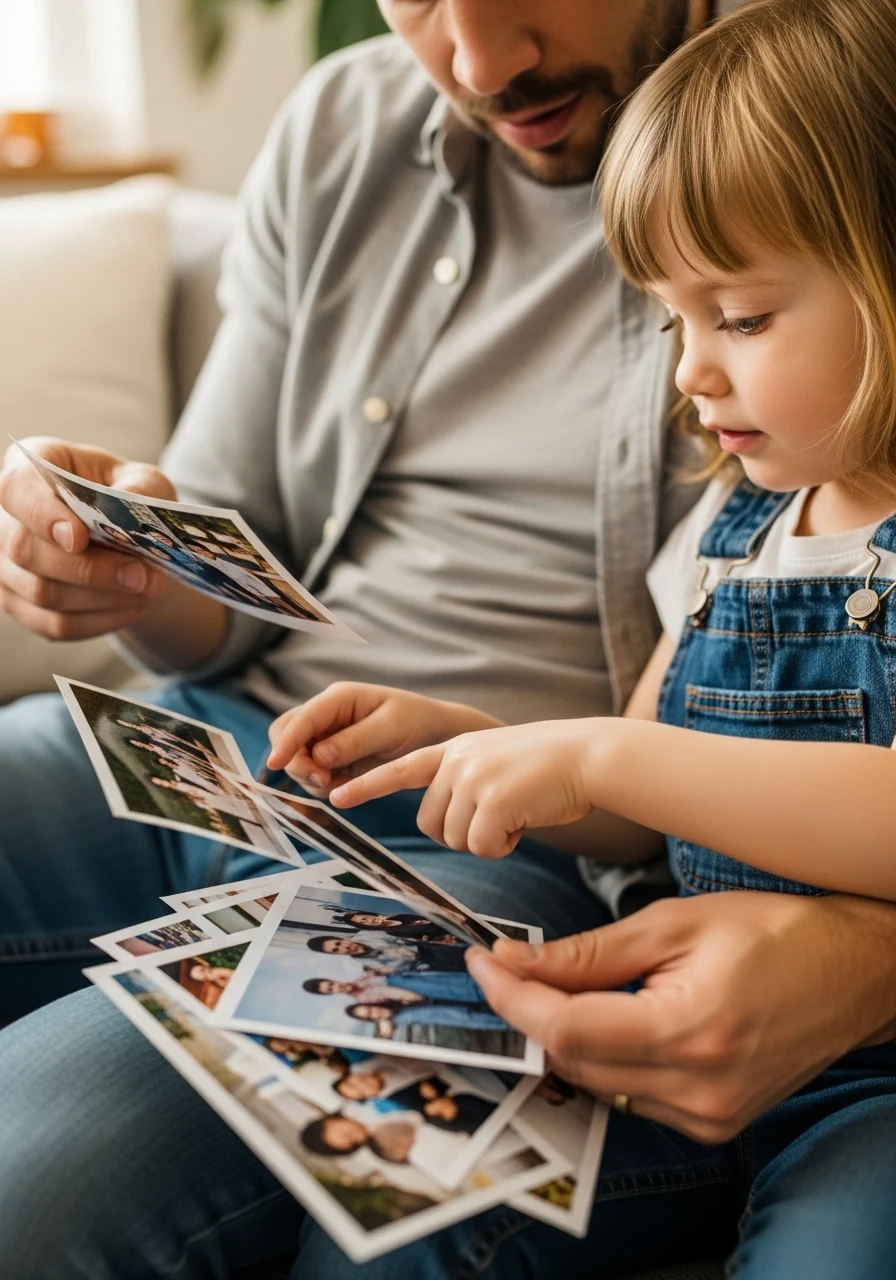
Print a few family photos or pull up a small digital album and tell simple stories about each picture. Ask your child questions about what they remember or how they felt. This helps with memory, language, and emotional connection. It’s a gentle, meaningful activity you can do together before bed or during quiet afternoons. You’ll both enjoy revisiting moments and strengthening family bonds with small, reassuring narratives.
Why This Works
- Reinforces family bonds and memory recall
- Encourages conversational skills and emotional sharing
- Low-stress, high-connection activity for any day
- Helps children understand routines and relationships
- Easy to adapt for short or longer sessions
Quick Tips
- Keep a small photo box for child-friendly access
- Use simple prompts like “Who is this?” or “What happened?”
- Rotate photos to keep stories fresh
- Let kids help arrange the order of stories
- Combine with drawing to recreate favorite scenes
These activities for kids at home are designed to fit real parenting days. They work well when time is short, energy varies, and you need simple ways to connect and support development. Save or pin this list to come back to when you need quick ideas. Try one or two this week and notice how small, consistent moments add up. Which activity do you think your child will ask for first?