You are juggling so much and finding simple ways to keep the kids happily busy can feel like a small win. These craft activities for kids are meant to give you those calm pockets where children play, create, and learn while you breathe or join in for gentle bonding. You get ideas that work whether you have a newborn in the house, a toddler testing limits, or older kids wanting a longer project.
Each activity here is practical for real family life. They support your parenting routine, encourage creativity, and help with fine motor skills or quiet play. Pick a few favorites, save them for rainy days, and trust that these craft activities for kids can bring peace and playful connection to your days.
1. Homemade Play Dough Stations
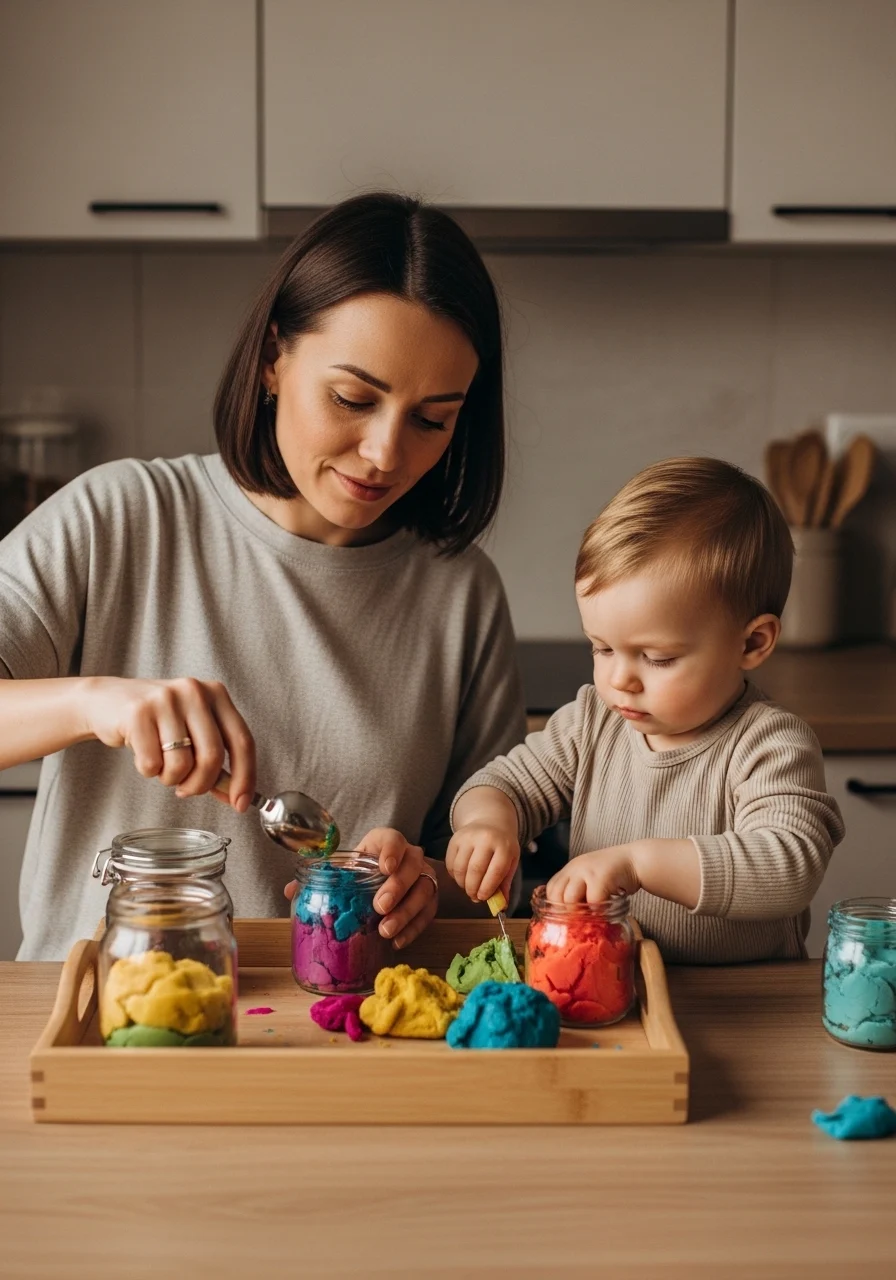
Set up jars of scented, non-toxic play dough with rolling pins, cookie cutters, and safe sculpting tools. Kids can spend long stretches creating shapes, animals, and pretend food. You can join briefly or use the time to handle chores or rest. This is great for toddlers and preschoolers who love repetitive, sensory play and for siblings to share a calm activity.
Why This Works
- Builds fine motor skills through pinching and rolling
- Keeps kids engaged with sensory textures
- Encourages imaginative solo play
- Easy to refresh with new colors or scents
- Low-prep and reusable for repeat sessions
Quick Tips
- Store dough in airtight containers between sessions
- Add natural scents like lemon or lavender
- Rotate tools to keep interest high
- Use cookie cutters for theme-based play
- Supervise toddlers for dough ingestion
- Make simple dough together for added bonding
2. Cardboard Box Fort Building

Gather moving boxes, tape, markers, and fabric to create forts and playhouses. Kids can plan rooms, draw doors, and hide inside for reading or pretend play. Forts invite prolonged imaginative play and cooperative building when siblings are involved. This project turns recycled materials into a private play space that can last for days.
Why This Works
- Sparks imaginative role play and storytelling
- Uses inexpensive, recycled materials
- Promotes cooperative play among siblings
- Provides a cozy retreat for quiet time
Quick Tips
- Cut windows for light and ventilation
- Use painter’s tape for easy fixes
- Add a string of battery fairy lights for warmth
- Keep scissors and box cutters for adults only
- Create a fort-cleanup routine
- Let kids design signs or menu boards
3. Sticker Collage Corner

Lay out sheets of paper, sticker packs, safe scissors, and markers to make sticker collages. Kids can create scenes, tell stories, or build sticker books to flip through. It’s low-mess and independent, perfect for short bursts or long sessions when they get into a theme. This suits toddlers through early elementary ages.
Why This Works
- Simple setup that encourages sustained focus
- Boosts creativity without much parental prep
- Great for fine motor practice and decision making
- Minimal cleanup for busy caregivers
Quick Tips
- Offer themed sticker packs for variety
- Use large paper taped to the floor for big projects
- Keep a sticker organizer for easy access
- Encourage storytelling about the collage
- Reuse sheets for homemade stickers later
4. Nature Scavenger Collages

Go on a nature walk and collect leaves, petals, and small sticks, then glue them onto paper to make a collage. This blends outdoor time with a calming craft that can take hours as kids sort and arrange treasures. It connects children with nature and offers a sensory, mindful break in your day.
Why This Works
- Combines fresh air with creative play
- Teaches observation and sorting skills
- Calms anxious or restless kids through nature
- Produces keepsake artwork to display
Quick Tips
- Use contact paper for easy, glue-free collages
- Discuss textures and colors to boost language
- Keep a nature bag in the car for spontaneous finds
- Dry leaves between books to preserve them
- Turn collages into seasonal displays
5. Paper Plate Mask Workshop

Give kids paper plates, paints, markers, and craft sticks to design masks. They can create animals, superheroes, or silly faces and use them for hours of pretend play. This merges art with dramatic play, so the crafting extends naturally into imaginative scenes and storytelling.
Why This Works
- Combines art with active pretend play
- Encourages role play and narrative thinking
- Easy for a range of ages with varied complexity
- Affordable and quick to set up
Quick Tips
- Pre-punch holes for easier assembly
- Offer feathers, yarn, and stickers for texture
- Make a mask parade to showcase work
- Use child-safe paints and let masks air dry
- Store masks for future dress-up days
6. DIY Bead Jewelry Bar

Set up a bead jewelry station with elastic cords, beads, and clasps. Kids can create bracelets and necklaces, experimenting with colors and patterns for long stretches of focused work. This activity boosts concentration and fine motor control and gives them wearable keepsakes to be proud of.
Why This Works
- Strengthens fine motor and pattern skills
- Promotes concentration and patience
- Provides a tangible result kids can wear or gift
- Easy to adapt for different ages
Quick Tips
- Use large beads for younger children
- Pre-cut elastic to child-friendly lengths
- Offer color prompts or pattern challenges
- Supervise small parts with toddlers
- Store beads in small containers for reuse
7. Sock Puppet Theater

Turn old socks into puppets with glue, buttons, and felt. Kids can craft characters, write short shows, and perform for family. Puppet-making and playing can fill long stretches and encourage storytelling skills, social play, and confidence when they share their shows.
Why This Works
- Encourages storytelling and emotional expression
- Offers cooperative play and role practice
- Reuses items you already have
- Comfortable, low-stress performance outlet
Quick Tips
- Keep a puppet box with extra materials
- Make one puppet per family member for role play
- Film shows on a phone for later viewing
- Use felt glue to avoid sewing for young kids
- Rotate characters to keep interest
8. Salt Dough Keepsakes
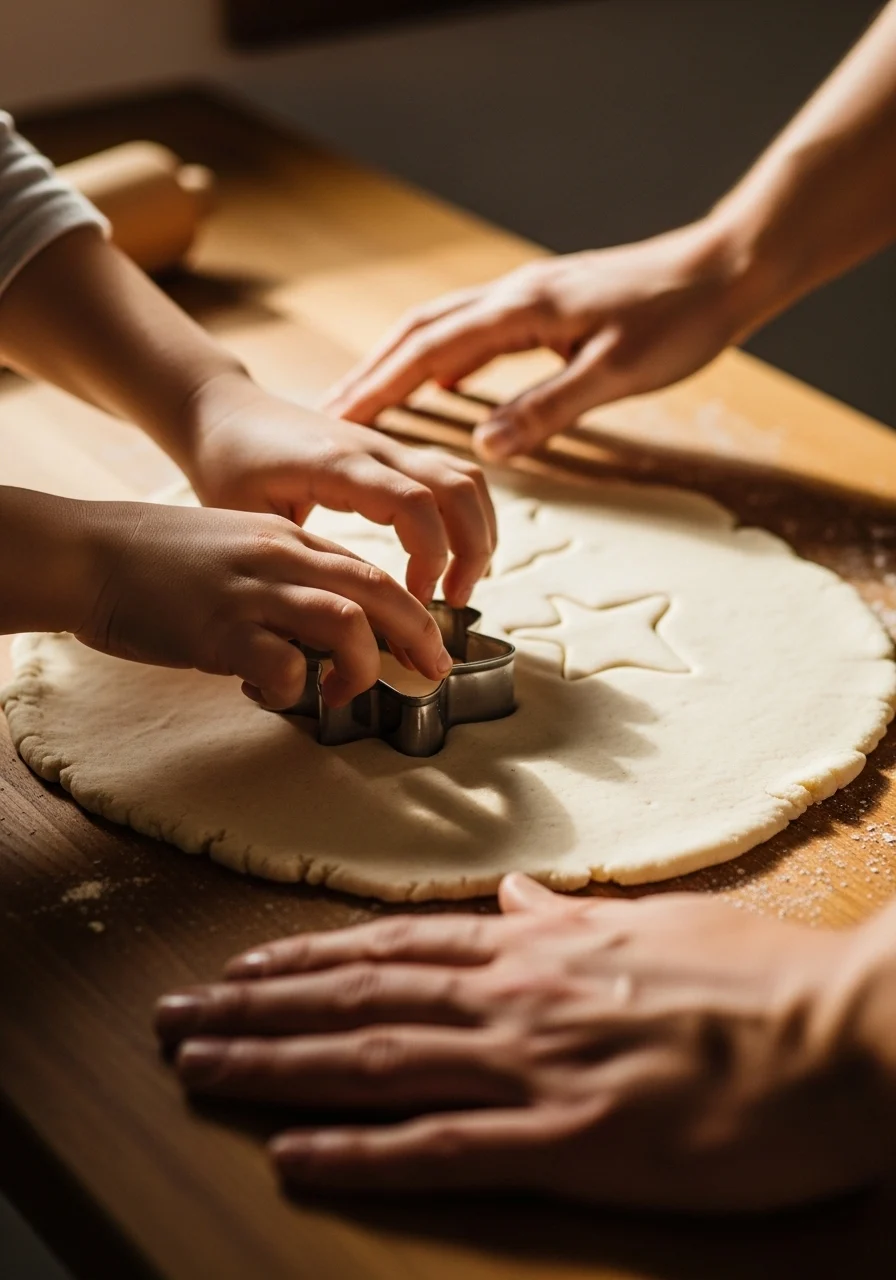
Mix salt dough, shape it with cutters or molds, then bake to harden and paint. Kids can make ornaments, name tags, or tiny figures. This is tactile and creative and produces durable pieces that can be painted over time, keeping children engaged from mixing to final decoration.
Why This Works
- Hands-on sensory experience from start to finish
- Produces lasting keepsakes that matter to families
- Lets kids take ownership of multi-step projects
- Affordable materials you likely have at home
Quick Tips
- Use cookie cutters for easy shapes
- Let kids paint after dough cools completely
- Add names or dates for memory crafts
- Store finished items in a special box
- Supervise oven time and baking
9. Watercolor Resist Art

Have kids draw with white crayon on paper then paint watercolors over it to reveal hidden designs. This simple trick keeps children engaged as the pattern appears and changes. It’s soothing and surprising, which helps kids focus and experiment with color blending.
Why This Works
- Teaches cause and effect in art
- Calming painting process that lasts
- Encourages experimentation without messy glue
- Works well for a wide range of ages
Quick Tips
- Tape paper down to prevent warping
- Offer a palette of colors to mix
- Use thick paper for best results
- Let pieces dry on a flat surface
- Turn art into greeting cards
10. Recycled Material Sculptures

Collect clean recyclables and let kids build sculptures with glue, tape, and paint. They can assemble vehicles, robots, or abstract art. This open-ended project can keep older kids busy for long stretches as they problem-solve and plan their structures.
Why This Works
- Promotes creative problem solving and engineering thinking
- Uses materials you already have
- Encourages longer, focused building sessions
- Good for sibling collaboration
Quick Tips
- Pre-sort materials by size and type
- Offer hot glue only to adults
- Encourage planning with a sketch first
- Make themed challenges like undersea or space
- Display finished sculptures on a shelf
11. Pom-Pom Painting Play
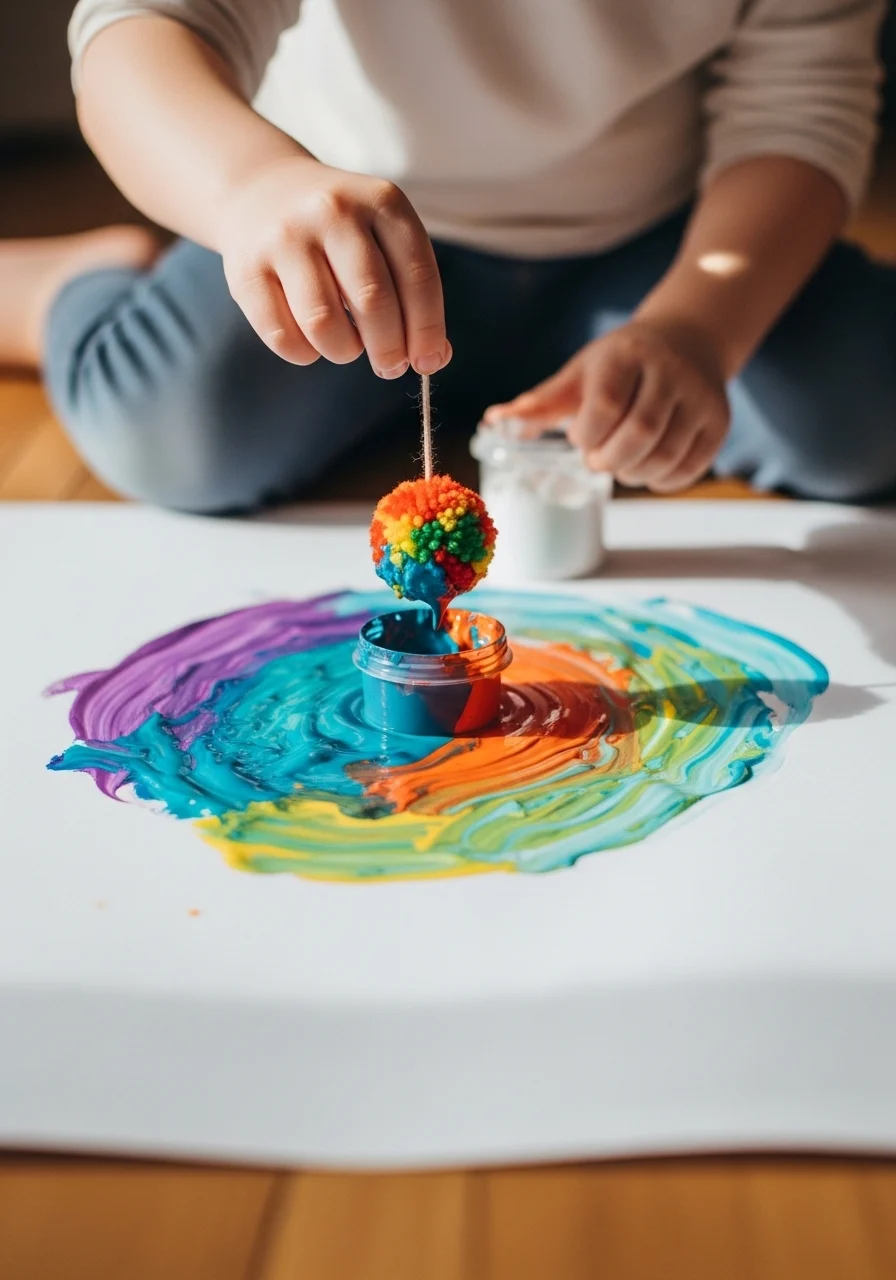
Tie pom-poms to clothespins or strings and dip them in paint to create dots and patterns. Kids love the rhythm of making marks and experimenting with movement. This method keeps them occupied and produces bright, abstract artwork to admire.
Why This Works
- Fun, rhythm-based painting that feels novel
- Develops coordination and pattern creation
- Minimal setup with a big visual payoff
- Lets kids experiment without strict rules
Quick Tips
- Use washable paints and a protective mat
- Offer different sizes of pom-poms
- Create a dotting challenge or template
- Turn finished pages into a gallery wall
- Encourage layered painting after drying
12. Cardboard City Play Mat
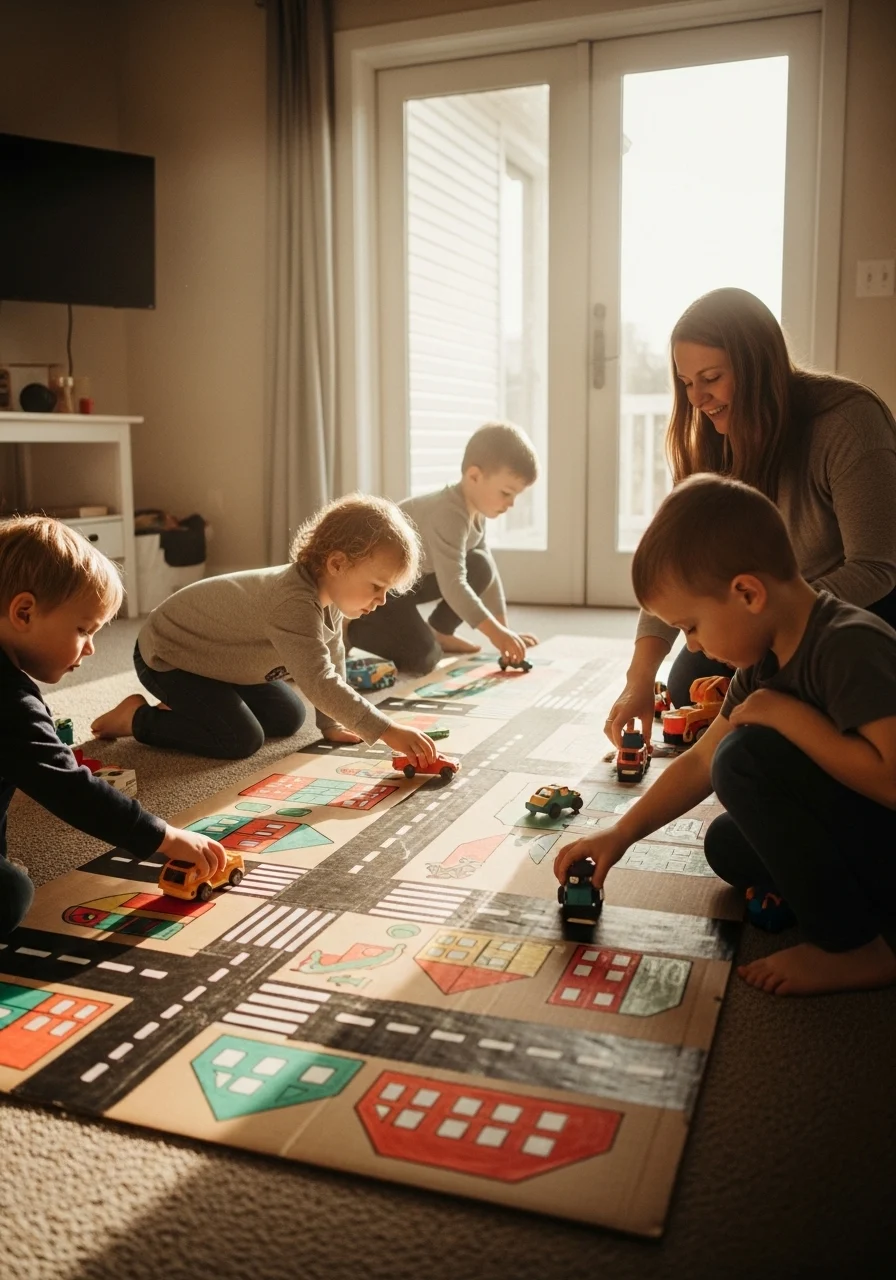
Paint a large cardboard or butcher paper mat with streets, parks, and buildings. Kids can create a whole play city with toys, blocks, and handmade signs. This project leads to extended imaginative play as they build stories, enact traffic, and create neighborhoods.
Why This Works
- Combines art with extended pretend play
- Encourages planning and role play
- Easy to expand with new buildings and streets
- Reusable and storable for repeat fun
Quick Tips
- Use washable paint for easy cleanup
- Add tape lines for durable roads
- Create tickets or maps for added play
- Store rolled up and add features over time
- Invite friends for community play days
13. Potato Stamp Art

Carve simple shapes into halved potatoes to use as stamps. Kids can stamp repeating patterns on paper, fabric, or bags. The repetitive motion and pattern play keep them engaged and allow for large-scale decorating that lasts a while.
Why This Works
- Simple repetitive action that calms and focuses
- Teaches pattern recognition and sequence
- Low cost and easy to prepare
- Produces bold, satisfying results
Quick Tips
- Pre-cut potato stamps for safety with younger kids
- Use tempera paint for bright colors
- Stamp on fabric for tote bag making
- Clean stamps promptly to preserve them
- Combine stamps with hand-drawn details
14. Tie-Dye T-Shirt Party
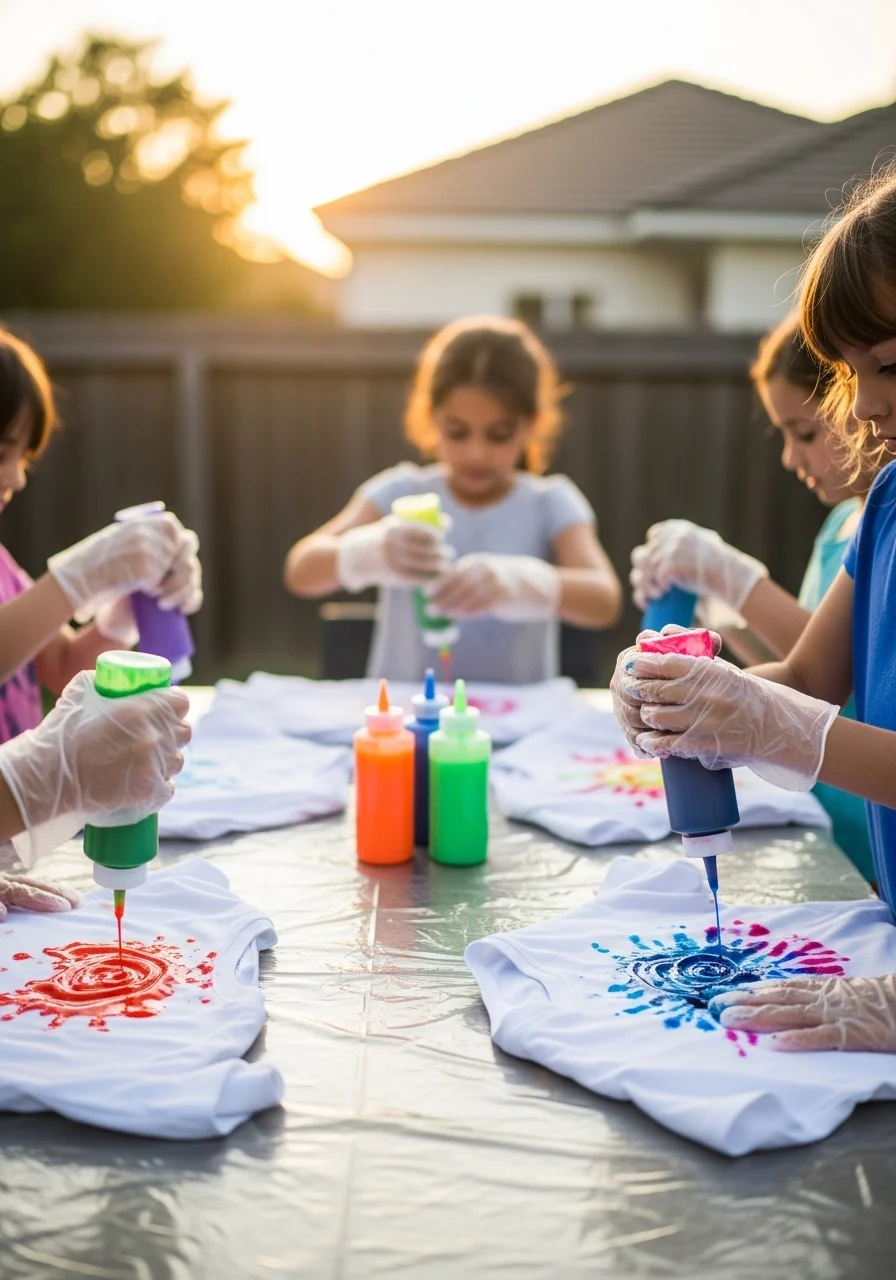
Provide white shirts, dye, rubber bands, and gloves for tie-dye sessions. Kids can make colorful shirts and wait through the dye process, which stretches the activity into a full afternoon. The anticipation of rinsing and revealing the shirts keeps excitement and engagement high.
Why This Works
- Creates personalized wearable art
- Involves planning, tying, and dyeing for long play
- Great for sibling groups or playdates
- Produces memorable keepsakes for family
Quick Tips
- Use outdoor space and protective coverings
- Follow dye instructions for safe rinsing
- Offer simple folding patterns for beginners
- Schedule dye time when you can supervise
- Turn the reveal into a mini fashion show
15. DIY Puzzle Cutting

Let kids draw a picture on cardboard and an adult cut it into puzzle pieces. They can trade puzzles or create matching challenges. Making and solving puzzles is a thoughtful activity that encourages concentration and visual memory.
Why This Works
- Boosts problem-solving and visual memory
- Allows creative ownership from drawing to solving
- Adaptable difficulty for different ages
- Reusable and easy to store
Quick Tips
- Use sturdy backing like cereal boxes
- Start with larger pieces for younger kids
- Make themed puzzles for holidays
- Laminate pieces for durability
- Store with a small photo of the original drawing
16. Pipe Cleaner Creature Garden

Provide pipe cleaners, beads, and felt for making creatures and flowers. Kids can bend and combine pieces into long-lasting figures that they play with or display. The flexibility of pipe cleaners makes them great for long, iterative building sessions.
Why This Works
- Encourages three-dimensional thinking
- Lets kids build and rebuild with ease
- Supports fine motor skill development
- Low-mess and portable for short bursts of play
Quick Tips
- Offer bead cores for added texture
- Make stems with green pipe cleaners for gardens
- Combine with a shoebox for a miniature habitat
- Teach simple twisting techniques to extend play
- Store creations in a clear box
17. Felt Board Storytelling
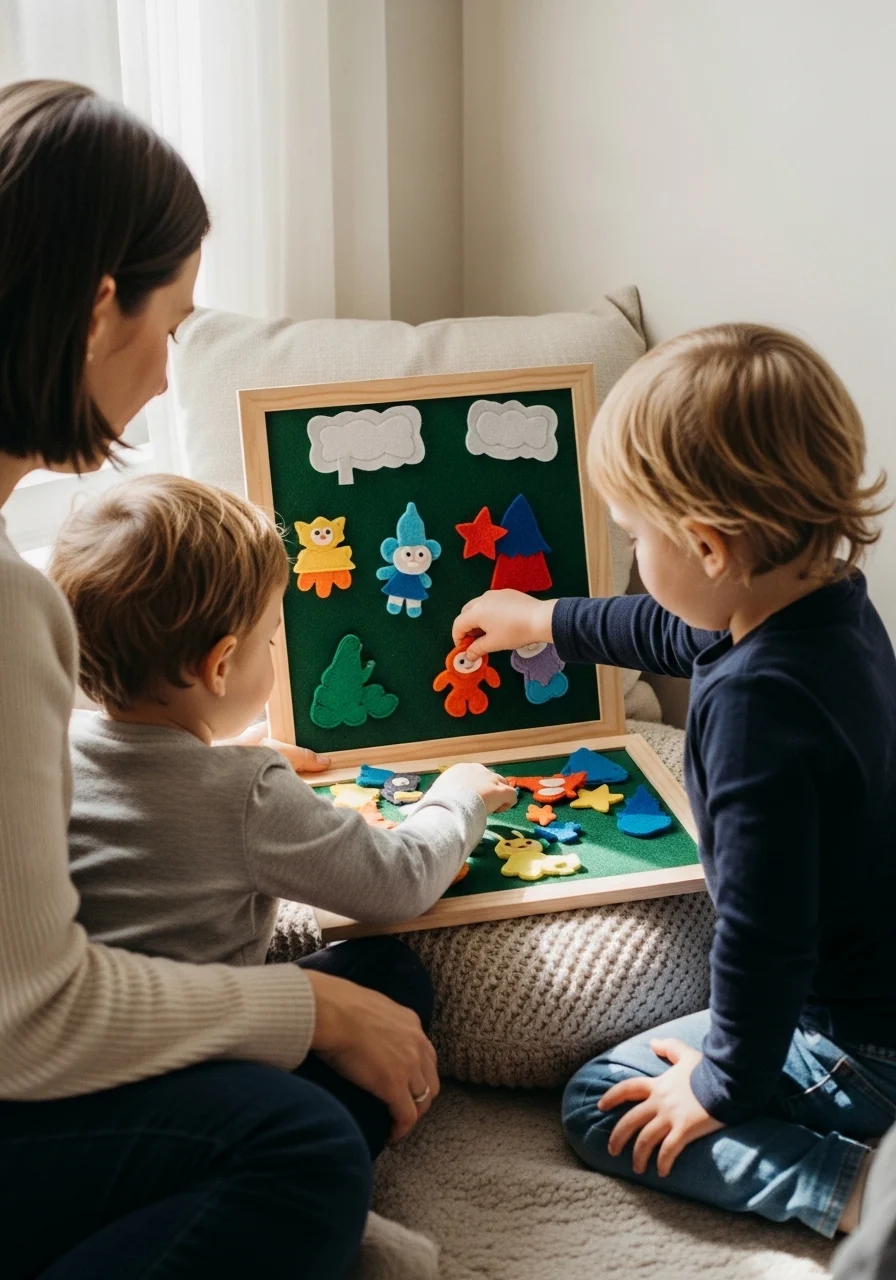
Cut felt pieces into characters and scenes and use a felt board for storytelling. Children can create and rearrange scenes for long narrative play. This supports language development and can be a calming, focused activity before nap or bedtime.
Why This Works
- Encourages narrative building and vocabulary
- Reusable and neat for quiet play
- Easy to adapt to any story or theme
- Great for cooperative storytelling with caregivers
Quick Tips
- Use pre-cut templates for quick starts
- Store pieces in labeled envelopes
- Introduce sound effects for dramatic play
- Use laminated story cards for prompts
- Rotate themes to renew interest
18. Lacing Card Challenges

Punch holes in cardboard shapes and provide laces for threading. Kids can spend a long time weaving patterns or practicing letters with lacing cards. This activity strengthens hand-eye coordination and patience, and it’s quiet enough for shared spaces.
Why This Works
- Improves fine motor coordination and dexterity
- Offers slow, focused play ideal for calm moments
- Simple to make and adapt for learning letters or shapes
- Portable for on-the-go quiet time
Quick Tips
- Reinforce holes with tape to prevent tearing
- Use colored laces for pattern challenges
- Make seasonal shapes for variety
- Supervise toddlers with shorter laces
- Store laces on binder rings to avoid tangles
19. Sticker Mosaic Portraits

Create a grid and let kids fill squares with tiny stickers to form portraits or pictures. The meticulous placing keeps kids engaged and proud of the final mosaic. This is especially satisfying for kids who enjoy detailed tasks.
Why This Works
- Encourages concentration and planning
- Produces a striking visual result that kids value
- Great for quiet independent sessions
- Builds patience through step-by-step progress
Quick Tips
- Draw a simple grid to start
- Use color keys for guided designs
- Try a portrait of a pet or family member
- Frame finished mosaics for display
- Keep sticker assortments organized
20. Kitchen Science Crafting
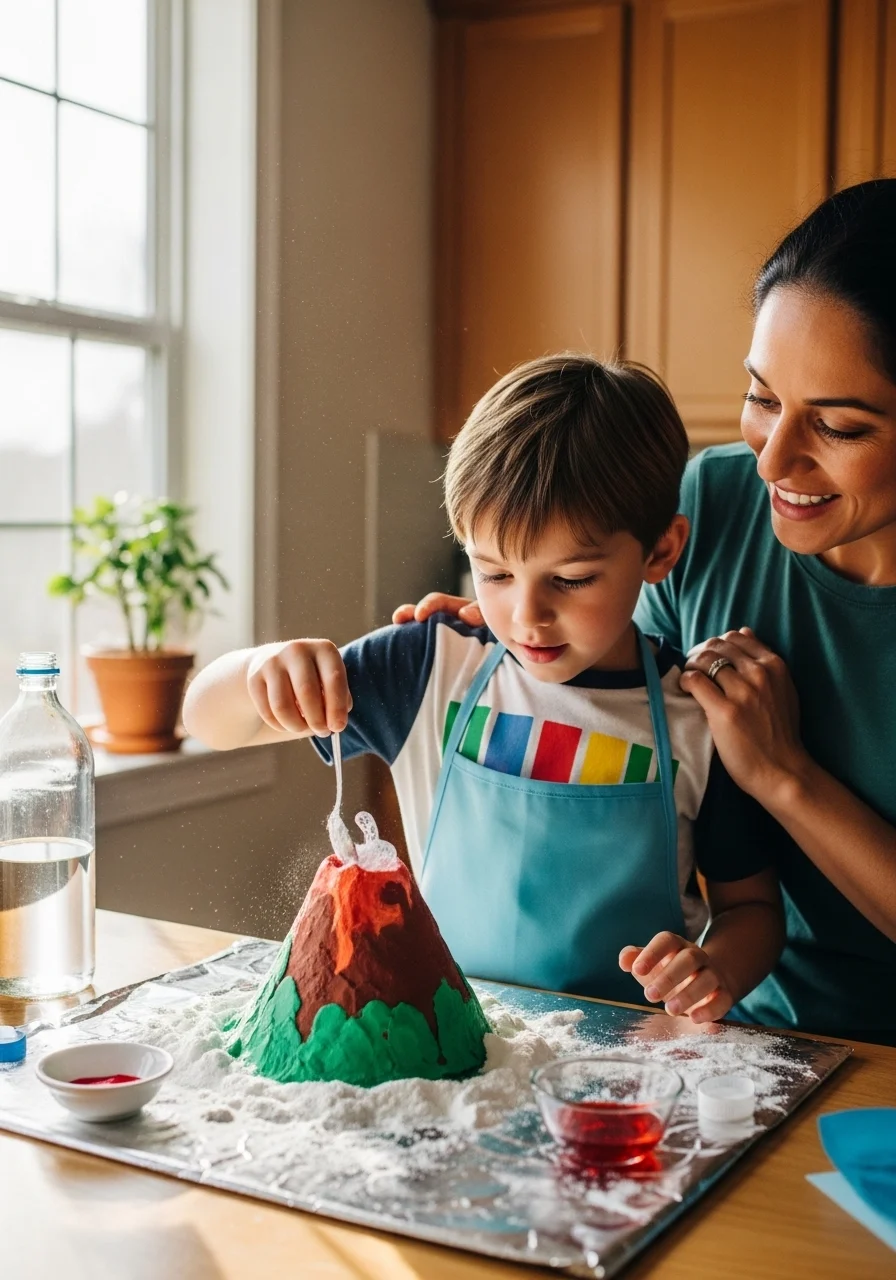
Combine simple science with crafting, such as baking soda volcanos in papier-mache or homemade lava lamps. Kids get hands-on mixing and observing reactions. These projects keep curiosity high and can stretch into long learning sessions with follow-up experiments.
Why This Works
- Mixes creativity with STEM learning
- Sustains interest with visible reactions and repeat trials
- Supports inquiry and cause-effect thinking
- Family-friendly and easy to supervise
Quick Tips
- Use safe household materials
- Prepare a tidy workspace before starting
- Discuss predictions to boost learning
- Capture results with photos for later review
- Plan a cleanup strategy ahead of time
21. Story Stones Creation

Paint small stones with simple images like animals or objects and use them to tell stories. Kids can pick stones to build a narrative, which can keep them inventing new tales for extended playtime. Story stones are tactile and portable for quiet, independent storytelling.
Why This Works
- Encourages imagination and sequencing
- Portable for calming car or waiting room play
- Supports language development and storytelling
- Easy to expand with new themed stones
Quick Tips
- Use non-toxic paints and seal with varnish
- Store in a fabric pouch for travel
- Offer theme packs like farm or space
- Invite kids to paint their own stones
- Use stones as bedtime story prompts
22. Shadow Tracing and Drawing
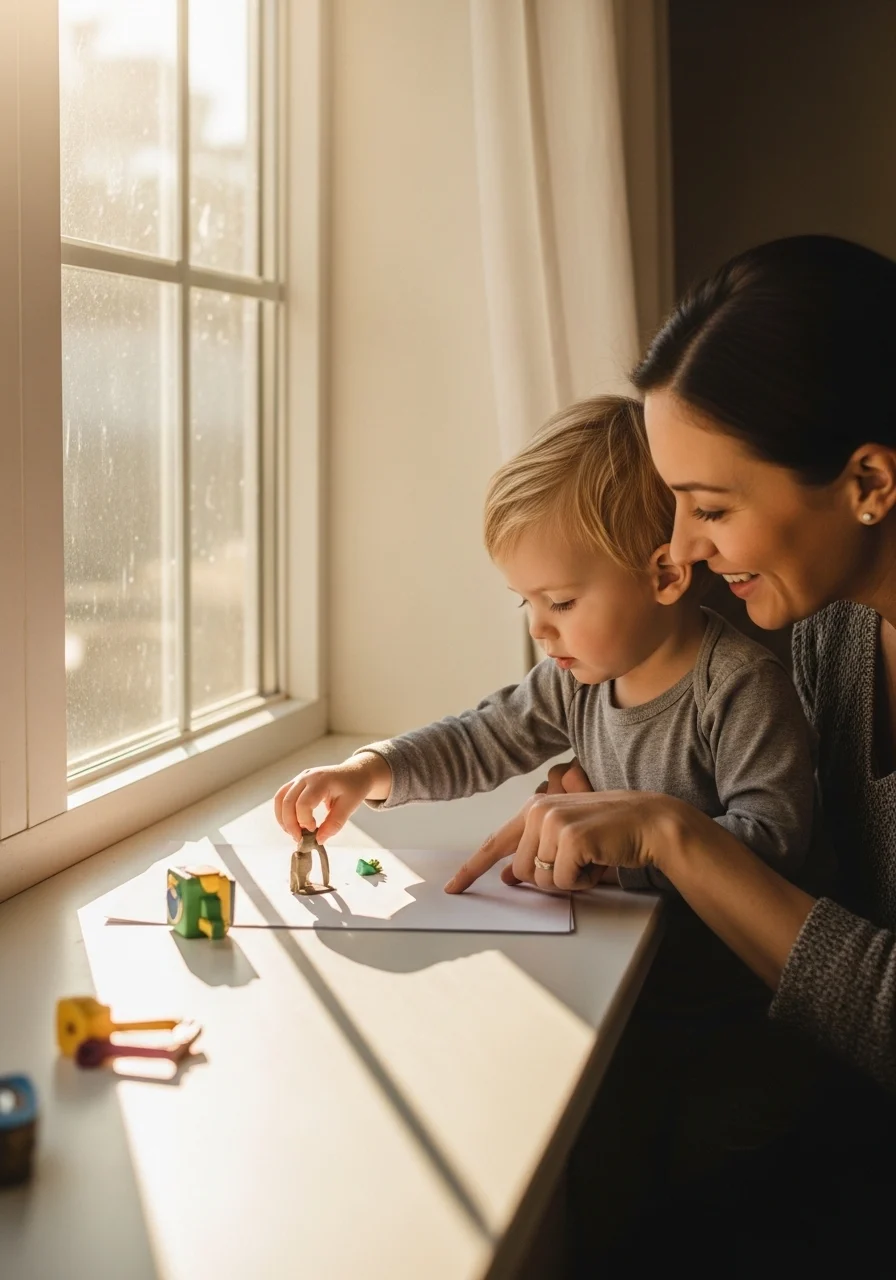
Place toys on paper where sunlight casts clear shadows and have kids trace and color the outlines. This activity can evolve into a long drawing session as they add details and backgrounds. It combines observation with art and makes quiet time feel inventive.
Why This Works
- Sharpens observation and drawing skills
- Low-prep and calming in natural light
- Turns ordinary toys into art subjects
- Works well for solo or paired creative time
Quick Tips
- Choose a time with strong natural light
- Use heavier paper to prevent tearing
- Encourage shading and color play within outlines
- Try different objects for varied shapes
- Make a shadow gallery to display work
23. Felt Play Food Kitchen

Cut felt into food shapes and let kids run a pretend kitchen filling plates and hosting tea parties. Crafting the food pieces can be a focused sewing or gluing task and the imaginative play afterwards can last for hours as kids role play mealtime and shopping scenarios.
Why This Works
- Blends crafting with role play for extended fun
- Teaches everyday routines through pretend play
- Creates quiet cooperative play with siblings
- Durable pieces that keep returning to playtime
Quick Tips
- Use no-sew glue for younger crafters
- Store food in a small basket for easy cleanup
- Make labels for early literacy practice
- Introduce simple sewing for older kids
- Rotate seasonal food sets for variety
You now have 23 easy, budget-friendly craft activities for kids that fit into real family life. Each idea supports creative play, skill-building, and peaceful moments for you and your children. Pin or save this list for rainy days, long afternoons, or when you need a calm, hands-on project that keeps kids happily occupied. Which of these will you try first with your little ones?