Babies have soft and sensitive skin. In the first year, parents may see rashes, flakes, or small bumps. Most newborn skin problems are harmless and go away on their own. But knowing how to spot them, care for them, and when to call a doctor can give parents peace of mind.
Below are the five most common baby skin issues, explained in simple terms.
Cradle Cap (Infant Seborrheic Dermatitis)
Cradle cap is a very common infant skin condition that causes thick, flaky patches on a baby’s scalp. It may look alarming, but it is not painful and usually clears on its own.

- What it looks like: Yellow, greasy, or scaly patches on the scalp, sometimes spreading to the eyebrows or ears.
- Cause: Overactive oil glands and a harmless skin yeast. It’s not due to poor hygiene.
- What parents can do: Wash hair with mild shampoo, gently brush scales with a soft baby brush, and apply a little baby oil or coconut oil to soften flakes.
- When to call a doctor: If the scalp becomes red, swollen, oozing, or if the rash spreads and doesn’t improve.
Baby Acne (Newborn Pimples)
Baby acne looks similar to teenage acne but is temporary. It often appears in the first few weeks and disappears without treatment.
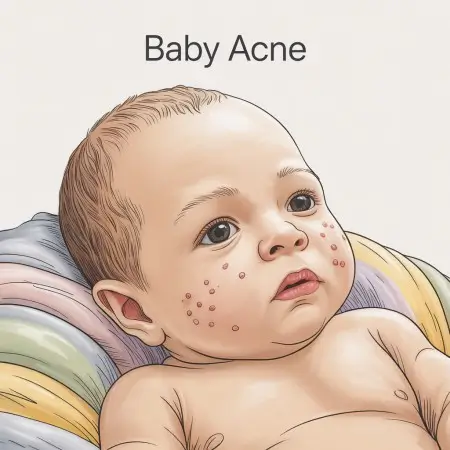
- What it looks like: Small red bumps or white pimples on cheeks, forehead, or chin.
- Cause: Hormones passed from mother to baby stimulate oil glands.
- What parents can do: Gently cleanse with warm water, avoid scrubbing, and don’t use oily lotions. Never squeeze pimples.
- When to call a doctor: If acne spreads, looks painful, lasts beyond 3–4 months, or is linked with fever.
Eczema (Atopic Dermatitis)
Eczema is a chronic skin condition that causes dryness and itching. It can come and go throughout childhood and sometimes runs in families.

- What it looks like: Red, itchy, dry patches on cheeks, arms, legs, or skin folds.
- Cause: Sensitive skin barrier, genetics, and triggers like heat, fragrances, or certain fabrics.
- What parents can do:
- Moisturize your baby’s skin several times a day with fragrance-free cream.
- Bathe your baby in lukewarm water.
- Use mild and gentle cleansers.
- Keep your baby’s nails short to stop scratching.
- When to call a doctor: If the rash oozes, crusts, causes severe itching, or interrupts sleep.
Peeling or Dry Skin
Many newborns have peeling skin in the first weeks. This is the body’s way of shedding the outer layer of skin after birth. It’s usually harmless and temporary.
- What it looks like: Flaky, peeling skin on the hands, feet, or body.
- Cause: Natural adjustment from life in the womb (amniotic fluid) to outside air.
- What parents can do: Bathe for only 5–10 minutes in warm water, moisturize afterward, and avoid harsh soaps.
- When to call a doctor: If skin is raw, blistered, red, or showing signs of infection.
Milia (Tiny White Bumps)
Milia are small white or yellow bumps on a newborn’s face. They are harmless and usually clear up on their own.

- What it looks like: Pinhead sized white or yellow bumps on the nose, cheeks, or forehead.
- Cause: Blocked pores and immature oil glands.
- What parents can do: Nothing is needed they disappear naturally in a few weeks. Just wash gently with warm water.
- When to call a doctor: If bumps spread quickly, ooze fluid, or become red and irritated.
General Baby Skincare Tips
- Stick to mild, fragrance free baby products.
- Wash baby clothes with gentle, hypoallergenic detergent.
- Keep baby’s skin moisturized to prevent dryness.
- Dress your baby in soft cotton fabrics to avoid irritation.
- Avoid overheating, since sweat can trigger rashes.
Final Thoughts
Most baby skin issues are normal and part of your newborn’s growth. With gentle care and patience, many newborn skin problems heal on their own. Still, always trust your instincts. If your baby’s rash looks unusual, spreads quickly, or makes them uncomfortable, don’t wait call your pediatrician.